
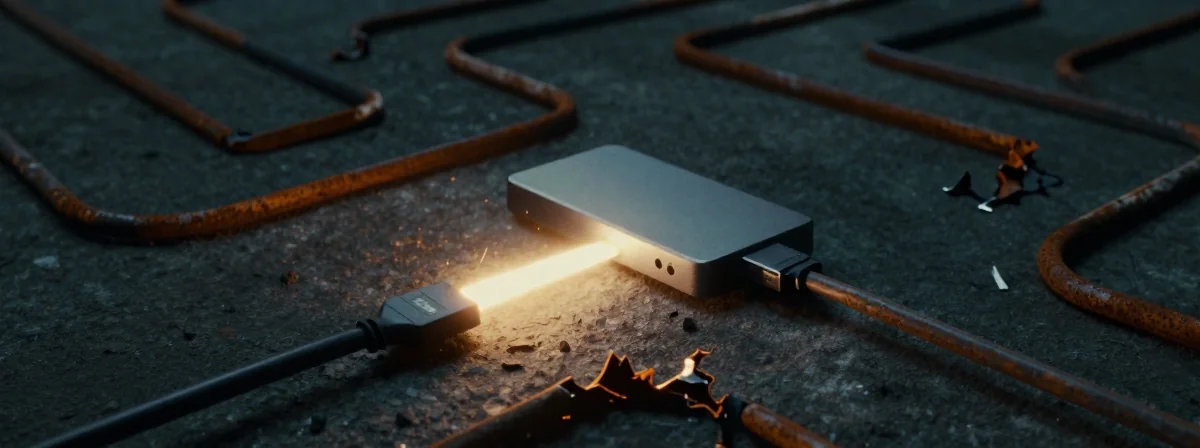
People keep asking me why their fancy new external SSD feels like a snail. They paid for speed, but their files copy at a crawl. The answer is rarely the drive itself—it’s the tiny cable or port holding them back. Here’s the thing nobody’s talking about: your USB connection might be the bottleneck you never suspected.
Real-World Performance
SIDE A: USB 2.0 Limitations If you’re stuck with USB 2.0, you’re maxing out at around 35-40 MB/s—barely faster than an old hard drive. Black or white ports are your telltale sign. This is fine for backups you do once a month, but try moving large game files or video projects and you’ll spend hours watching a progress bar. The original cables that come with drives often max out here too—even if the drive is capable of much more. I’ve seen too many users waste money on “fast” drives only to keep the slow cable that came in the box.
SIDE B: USB 3.2 Speed A proper USB 3.2 Gen 2 connection (blue ports, “SS” logos) can hit 10 Gbps—around 800-1000 MB/s in real-world use. This is where external SSDs actually shine. You can move a 50GB game in minutes instead of hours. The catch? You need the right port, the right cable, and a drive that actually supports these speeds. Many “USB-C” cables are still 2.0 inside—look for the extra pins and blue wiring if you want the full speed. Without all three pieces, you’re just paying for potential you’ll never use.
THE REAL DIFFERENCE Here’s what most people miss: USB speed isn’t just about the port color. The cable matters as much as the port, and often more than the drive itself. I’ve tested dozens of “USB-C” cables and found many are still 2.0 inside—just four pins instead of nine. Even if your port is blue, a cheap cable can force your $150 SSD to operate at $15 speeds. After years of using both, I’ve learned to always test with a known-good cable first—before even considering if the drive or port is at fault. The drive manufacturers know this, which is why they include cheap cables with expensive drives. It’s a hidden tax on your upgrade.
THE VERDICT If you’re doing serious work with large files, don’t trust the included cable—buy a verified USB 3.2 Gen 2 cable first. If you’re just moving photos and documents, a USB 3.0 connection (blue port) is probably enough. From experience, I’d rather have a 500GB NVMe drive in a good enclosure than a 1TB drive stuck on a 2.0 connection. If you’re limited to USB ports, test with CrystalDiskMark on a single large file before you return anything. Here’s my take: get the fastest drive you can afford, but always match it with the right cable and port—or you’re just wasting money.
Don’t fall for the “1TB is better” trap if your connection can’t handle it. A 500GB drive on USB 3.2 will feel faster than a 2TB drive on USB 2.0 every single time. Test your speeds before you buy—your time is worth more than the few dollars you “save” on a slower drive.