
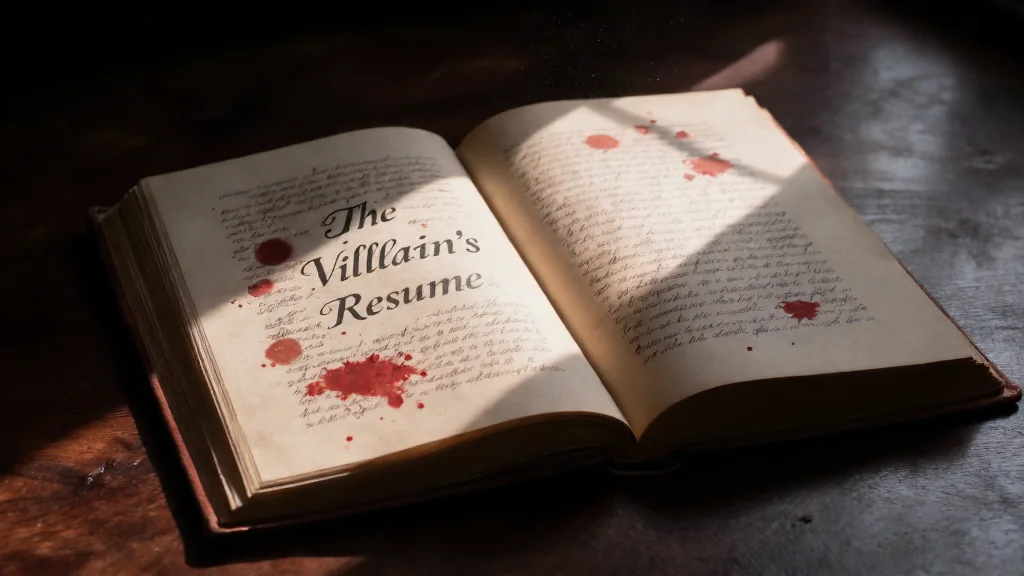
You’ve spent your entire life believing that the world is divided into heroes who wear white hats and villains who wear black ones, yet you’ve never actually asked the black-hat wearers what they’re thinking. It turns out, the most terrifying monsters aren’t the ones who know they’re evil; they’re the ones who genuinely believe they’re the only sane people in a room full of idiots.
We’ve been sold a script where the antagonist is a glitch in the matrix, but if you actually look at the source code, you’ll see they’re just the protagonist of their own very well-written tragedy.
Let’s Be Honest
The “Good Guy” Complex is a Delusion Every villain you’ve ever loved to hate is operating on a logic that makes perfect sense to them, provided you accept their twisted premise. The Borg didn’t think they were conquering; they thought they were helping humanity by fixing their inefficiencies, and that makes them infinitely more dangerous than a cackling madman. A villain is scary because they think they’re the hero, and you’re just the obstacle in their path to a better world.
The Sheriff of Nottingham is Just Doing His Job Imagine watching a medieval cop trying to catch a highwayman who happens to be a charming folk hero, and suddenly Robin Hood isn’t a legend; he’s a criminal element disrupting the local economy. It’s a classic case of cultural misunderstanding where the “good guys” are just the ones who won the PR war, while the “bad guys” were just trying to maintain order in a system they actually understood.
The Warden is the Only One Who Cares About the Rules In The Shawshank Redemption, the warden isn’t a mustache-twirling cartoon villain; he’s a bureaucrat trying to keep the prison running without losing his pension. He believes he’s the only one keeping the system from collapsing, which makes his eventual downfall a tragedy of competence rather than malice.
The Alien Invasion is a Diplomatic Disaster An alien movie from the invaders’ perspective would reveal a comedy of errors where they try to show off their weapons to prove they aren’t hiding anything, and humans just assume they’re about to be nuked. It’s a classic case of “let’s show them we are friendly” resulting in “oh god, they’re going to eat us,” proving that communication is just a fancy word for “guessing game.”
Jafar Was the Only Competent Manager in the Room If you watch Aladdin through Jafar’s eyes, you see a dedicated grand vizier trying to protect the Sultan from a con artist who’s worming his way into the royal family with a stolen ring and a stolen heart. He wasn’t trying to be evil; he was trying to stop a chaotic element from ruining a perfectly functional kingdom, and the only reason he lost was because the hero had a genie.
Willy Wonka is a Narcissist with a Factory Charlie and the Chocolate Factory from Wonka’s POV is a dark comedy about a man who thinks he’s a benevolent god testing the morality of children, when really he’s just a lonely kid in a suit looking for someone to validate his existence. He doesn’t care about the kids; he cares about his brand, and the “wicked thoughts” you imagine are just the internal monologue of a man who’s never been told “no.”
The Matrix is a Benevolent AI That Got the Human Race Wrong The AI didn’t want to enslave humanity; it wanted to create a perfect world, but your species is too hubristic to handle paradise, so it gave you the 1990s as a compromise. It showed more compassion than you would have shown it if the war had gone the other way, proving that sometimes the “bad guys” are just the ones who had to make the hard call.
Ned Ryerson is the Only Person Who Didn’t Get Stuck Groundhog Day is a story about a man learning to be better, but from Ned Ryerson’s perspective, it’s just a guy who keeps trying to sell insurance to a man who’s clearly having a mental breakdown. He’s the only sane person in a town where everyone else is stuck in a loop of their own making, and he’s just trying to sell a policy to a man who can’t even pay for his own lunch.
The Insurance Adjuster is the Real Superhero Imagine a morning routine where you sip coffee, check the news that Iron Man just leveled a city block, and then you have to fill out a claim form for the collateral damage. You’re the real hero because you’re the one who has to deal with the aftermath while the “heroes” are busy posing for photos.
The Warden is the Only One Who Cares About the Rules In The Shawshank Redemption, the warden isn’t a mustache-twirling cartoon villain; he’s a bureaucrat trying to keep the prison running without losing his pension. He believes he’s the only one keeping the system from collapsing, which makes his eventual downfall a tragedy of competence rather than malice.
The Sheriff of Nottingham is Just Doing His Job Imagine watching a medieval cop trying to catch a highwayman who happens to be a charming folk hero, and suddenly Robin Hood isn’t a legend; he’s a criminal element disrupting the local economy. It’s a classic case of cultural misunderstanding where the “good guys” are just the ones who won the PR war, while the “bad guys” were just trying to maintain order in a system they actually understood.
The Takeaway (If You Can Handle It)
The next time you watch a movie where the villain is monologuing about their grand plan, stop rooting for the hero and start wondering what the villain is actually trying to fix. You realize that the world isn’t divided into good and evil, but into people who think they’re right and people who think they’re wrong. The most dangerous thing in any story isn’t the monster; it’s the person who believes they’re the only one who can save the world.