
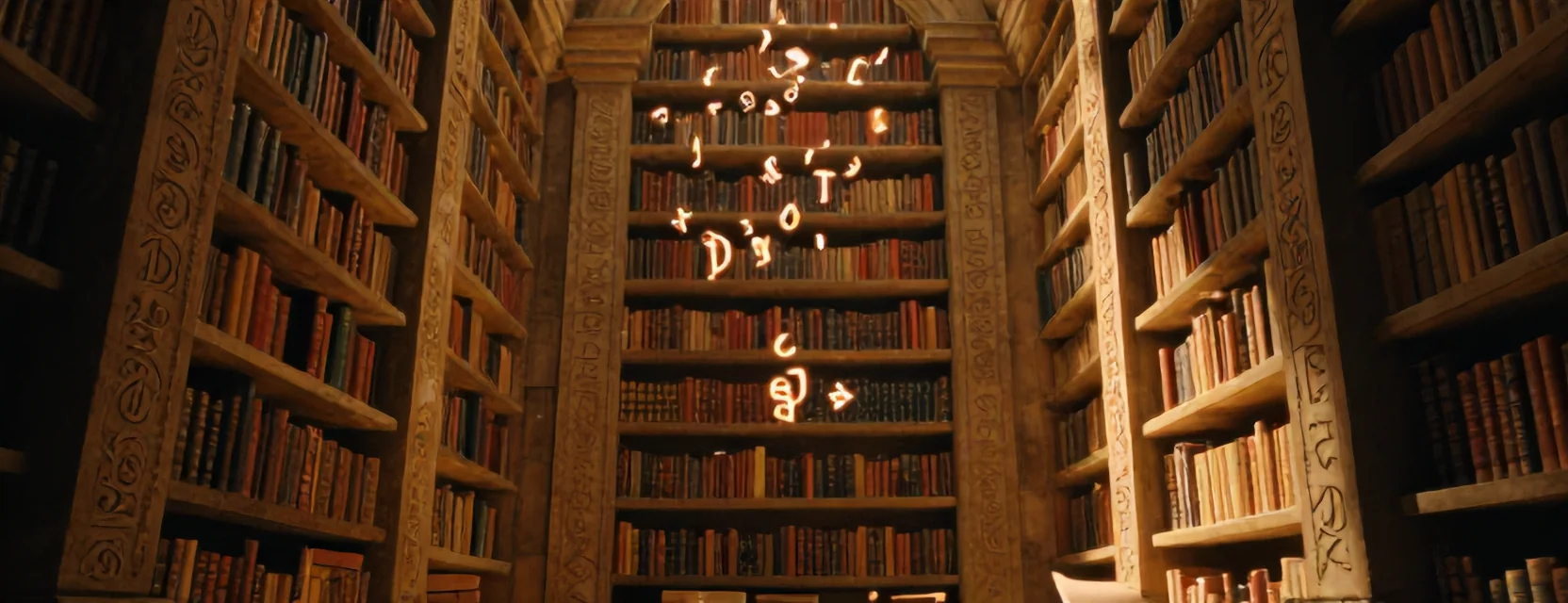
Most people see letters as static shapes—tools for communication, nothing more. But what if every curve, serif, and loop in your alphabet holds a secret history? What if the way you write your lowercase ‘g’ today is a direct descendant of tools and traditions thousands of years old?
We take letters for granted, but they’re living fossils. Each one evolved through necessity, culture, and even the materials people had to work with. The disconnect between your typed ‘G’ and your handwritten ‘g’ isn’t a bug—it’s a feature, a snapshot of thousands of years of adaptation.
The truth is, your alphabet is a time capsule. Every letter tells a story of how humans turned practical needs into art, and how those designs still shape how you think and communicate today.
Why Does Your Handwritten ‘G’ Look Nothing Like Your Typed ‘G’?
It’s not just you. The disconnect between digital and handwritten letters is a perfect example of how writing systems evolved in isolation. When you learned cursive, you were taught a set of optimizations—how to write quickly with a pen. When fonts were designed for print, they optimized for clarity at small sizes.
Think of it like game mechanics: early RPGs had turn-based combat because processors couldn’t handle real-time. Later games evolved to real-time because technology allowed it. Letters are the same—each style is a solution to a problem.
The double-story ‘g’ (the one with two loops) in traditional typography, for example, was designed to be legible in print. But in handwriting, a single-loop ‘g’ became dominant because it’s faster to write. Your dad’s different ‘g’ from Catholic school? That’s a regional variation—like how different game servers might have unique mods.
How Ancient Tools Shaped Modern Letters
The shape of capital letters, in particular, tells a story of stone. Many uppercase letters trace back to Roman inscriptions carved in stone, where straight lines and clear forms were essential. Lowercase letters, on the other hand, evolved from cursive scripts written on parchment or papyrus.
This is why ‘A’ looks like an ox head (from ancient hieroglyphs) but your lowercase ‘a’ is a simplified loop. It’s like comparing a tank (built for durability) to a sports car (built for speed). Both are vehicles, but their designs reflect different priorities.
Even cultural constraints influenced letter shapes. Burmese script, for instance, avoids straight lines because they were written on palm leaves—straight lines would split the fragile material. It’s like designing a UI for a touch screen versus a keyboard—you adapt to the medium.
The Surprising Connection Between Fonts and Handwriting
You might think fonts and handwriting are opposites, but they’re two sides of the same coin. All letters, whether typed or written, trace back to the same ancestral forms. The difference is in the constraints:
- Handwriting: Optimized for speed and personal expression.
- Typography: Optimized for consistency and readability at scale.
This is why some fonts feel “handwritten” (they mimic the natural flow of pen strokes) while others feel “mechanical” (they prioritize uniformity). It’s like comparing a hand-drawn animation to a 3D model—both represent the same character, but their methods reveal different priorities.
Even the General Mills logo ‘G’ (a stylized, flourished version) shares structural DNA with your basic printed ‘G’. The loops, serifs, and flourishes might change, but the core shape remains. It’s like how different programming languages might solve the same problem with different syntax, but the logic is the same.
Why Learning Letter History Makes Modern Design Easier
When you understand how letters evolved, you start seeing patterns everywhere. Why do some fonts feel “ancient”? Because they mimic scripts from the Middle Ages. Why do others feel “futuristic”? Because they break with tradition.
This knowledge is like a cheat code for design. You can intentionally evoke a certain era or mood by choosing fonts that reflect specific historical periods. It’s the difference between randomly selecting tools and using the right one for the job.
For example, if you want something that feels trustworthy and traditional, you might choose a font with clear Roman influences. If you want something playful, you might choose a script font that mimics handwriting. The history isn’t just interesting—it’s practical.
The Hidden Language of Letterforms
Letters aren’t just symbols; they’re a form of cultural communication. The way a culture writes reveals its values. Roman inscriptions emphasize order and permanence. Arabic script flows like poetry. Even the way you dot your ‘i’ or cross your ’t’ is a micro-expression of identity.
This is why typography is such a powerful tool. When you choose a font, you’re not just selecting a style—you’re making a statement. It’s like choosing a character class in an RPG: each has its strengths and weaknesses, and the right choice depends on your goals.
What This Means for You Right Now
Every time you type, write, or design, you’re participating in a tradition that spans millennia. The letters you use are optimized solutions to problems people faced long ago. Understanding that history doesn’t just make you appreciate typography—it makes you better at it.
Next time you’re designing something, ask: What problem is this font solving? Is it about speed, clarity, elegance, or something else? The answer will reveal what tools you should use. And if you’re ever stuck, remember: the best solutions often come from looking backward.
The alphabet is a system, just like any other. And like any system, it’s only as good as how well you understand it. Now you do.