
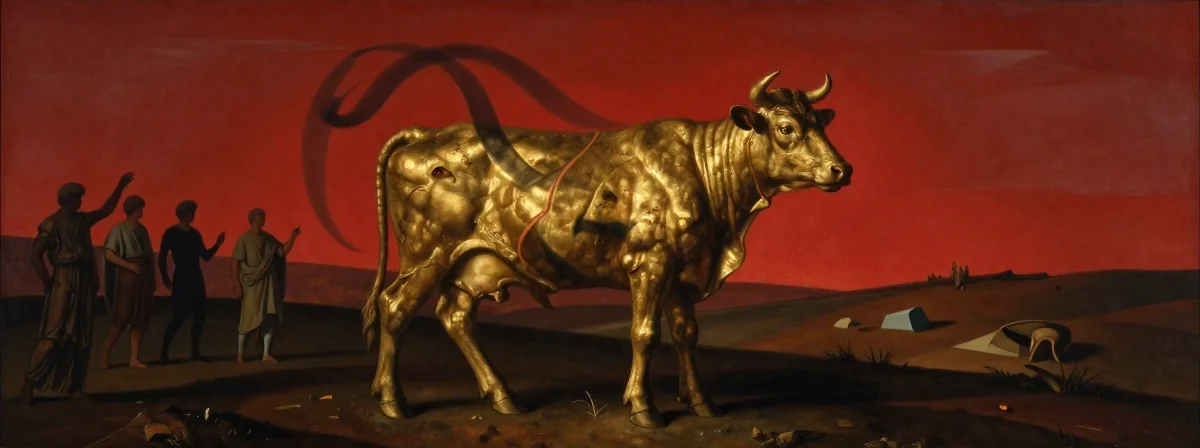
Some symbols are so deeply embedded in our collective consciousness that they transcend time. The golden calf is one of them. What began as a biblical parable about the dangers of idolatry has evolved into a powerful metaphor for modern political and cultural worship. But why does this ancient symbol still resonate today? And what does it reveal about our own tendencies to elevate leaders and ideas to god-like status?
The story of the golden calf comes from Exodus 32, where the Israelites, impatient for Moses’ return from Mount Sinai, crafted a golden idol to worship. This act of idolatry became a cautionary tale about turning away from truth and truth-tellers. Fast-forward thousands of years, and the golden calf has been resurrected in modern critiques – from political cartoons to viral memes – as a symbol of blind faith in flawed leaders.
But there’s more to this symbol than meets the eye. Its layers of meaning, historical evolution, and contemporary relevance make it a fascinating lens through which to examine our own era.
Why Did the Israelites Build a Golden Calf in the First Place?
The biblical account of the golden calf isn’t just a random story; it’s a profound commentary on human nature. When Moses delayed returning from Mount Sinai, the Israelites grew restless. They demanded a tangible representation of their divine connection – something they could see, touch, and worship. The result was a golden calf, crafted from their jewelry, symbolizing both prosperity and a departure from the abstract, higher truths Moses was meant to bring.
This act wasn’t just about impatience; it was about the human tendency to replace the divine with something more accessible – something that aligns with our desires. The golden calf became a symbol of idolatry: the worship of something finite when we should be seeking something infinite. Today, we see this same dynamic play out when we elevate politicians, celebrities, or ideologies to untouchable status, ignoring their flaws in favor of the comfort they provide.
The Golden Calf as a Political Statement
In modern times, the golden calf has been repurposed as a tool for political critique. When protesters burn effigies of leaders or create satirical golden statues, they’re invoking the same ancient symbolism: the idea that this person or idea has become a false idol, leading people away from truth.
For example, the burning of a golden Trump effigy at Mar-a-Lago wasn’t just an act of anger; it was a deliberate reference to Exodus 32. The choice of gold – a material associated with wealth and excess – and the calf form – a symbol of base desires – created a powerful visual critique of a leader seen as embodying those traits. The message: this figure has become a modern golden calf, worshipped by followers who overlook his flaws.
This isn’t a new tactic. Throughout history, from ancient Rome to medieval Europe, leaders accused of tyranny or corruption were often compared to idols or false gods. The golden calf, in particular, has endured because it taps into a universal fear: that we might be worshipping something or someone unworthy of our devotion.
Is the Golden Calf the Same as Baal or Moloch?
While the golden calf is distinct from other ancient idols like Baal or Moloch, there are fascinating parallels. Baal, a Canaanite storm god, was often depicted as a bull, and his worship involved rituals that the Israelites were warned against. The golden calf, in some interpretations, may have been an attempt to syncretize Yahweh (the God of Israel) with Baal, creating a hybrid deity that felt more familiar.
Moloch, on the other hand, was associated with child sacrifice and was often depicted as a bull or an owl (especially in modern conspiracy theories about Bohemian Grove). While the golden calf didn’t involve such practices, the underlying theme is the same: the substitution of a true, ethical path with something more primal or self-serving.
What makes the golden calf unique is its biblical context. Unlike Baal or Moloch, which were explicitly foreign gods, the golden calf was created by the Israelites themselves – a symbol of their own departure from divine guidance. This self-inflicted idolatry makes it a particularly potent warning: we are capable of creating our own gods, even when we know better.
The Golden Calf and Modern Idolatry
Today’s world is rife with its own forms of idolatry. We see it in the cults of personality around political figures, where critics are silenced and flaws are ignored. We see it in consumer culture, where brands and products are elevated to near-religious status. And we see it in ideological movements, where dogma replaces critical thinking.
The golden calf serves as a reminder that idolatry isn’t just about ancient statues; it’s about any time we place finite things – people, ideas, objects – above the infinite truths that should guide us. Whether it’s a politician who promises too much, a social media influencer who dictates values, or a technological innovation that distracts us from deeper questions, the risk is the same: we begin to worship the creation rather than the creator.
Consider how easily we can become attached to a political leader who embodies our hopes or fears. We might overlook their inconsistencies, justify their transgressions, and even attack those who question them. This isn’t unlike the Israelites demanding a golden calf – it’s the same impulse to replace the abstract with the concrete, the challenging with the comforting.
Why Burn a Golden Calf Today?
The act of burning a golden calf today is both a literal and metaphorical rejection. Literally, it’s a destruction of an idol – a symbolic breaking of chains. Metaphorically, it’s a rejection of the mindset that created the idol in the first place.
When protesters burn a golden calf effigy, they aren’t just expressing anger; they’re performing an ancient ritual of purification. They’re saying: we see the idol for what it is, and we refuse to be bound by it. This act echoes the biblical narrative where Moses, upon returning from the mountain, destroys the golden calf, grinding it to powder and forcing the Israelites to drink it – a visceral reminder of their own complicity.
In modern contexts, burning a golden calf can also be a critique of materialism and excess. Gold, after all, is a symbol of wealth and power. By burning it, protesters are rejecting the very systems that create idols in the first place – whether those are economic, political, or cultural.
The Golden Calf and Religious Hypocrisy
One of the most striking aspects of the golden calf story is its critique of religious hypocrisy. The Israelites, who had just witnessed miracles and received divine law, immediately turned to idolatry. This contradiction – the gap between what we claim to believe and how we actually behave – is as relevant today as it was then.
We see this in political movements that claim moral high ground while engaging in unethical behavior. We see it in religious institutions that preach love while practicing exclusion. And we see it in individuals who profess certain values but act in ways that contradict them.
The golden calf, in this sense, is a mirror. It reflects our own inconsistencies and warns us against the dangers of pretending to follow a higher truth while serving our own desires. The story isn’t just about ancient Israelites; it’s about all of us, in every era, who struggle to align our actions with our ideals.
What Does the Golden Calf Reveal About Human Nature?
At its core, the golden calf is a story about the human condition. We crave connection, meaning, and guidance, but we often settle for substitutes when the real thing feels too abstract or demanding. The golden calf represents those substitutes – the shortcuts, the compromises, the false assurances that allow us to feel secure without truly growing.
This isn’t just a religious lesson; it’s a psychological one. Cognitive scientists might call it confirmation bias – the tendency to seek out and favor information that aligns with our existing beliefs. The golden calf, in a way, is the ultimate confirmation bias: a god that looks like what we want it to be, rather than what it truly is.
Understanding this dynamic can help us recognize our own tendencies toward idolatry. Whether it’s a political ideology, a social trend, or a personal belief, we must ask: is this truly serving a higher truth, or is it a golden calf – something we’ve created to make ourselves feel better?
The Golden Calf as a Call to Authenticity
Ultimately, the golden calf isn’t just a symbol of what we should avoid; it’s a call to authenticity. The story of Exodus 32 ends with Moses pleading for forgiveness and leading the Israelites toward a more genuine relationship with God – one based on truth, not idols.
Today, this call to authenticity is more urgent than ever. In an age of misinformation, echo chambers, and performative activism, we need to ask ourselves: what are we truly worshipping? Whom are we following, and why? Are we seeking truth, or are we content with the golden calves we’ve created to make life easier?
The golden calf, in its enduring power, reminds us that the path to authenticity isn’t about destroying external idols; it’s about recognizing and dismantling the idols within. Only then can we move beyond the false gods of our time and embrace the deeper truths that have always been there – waiting for us to see them.