
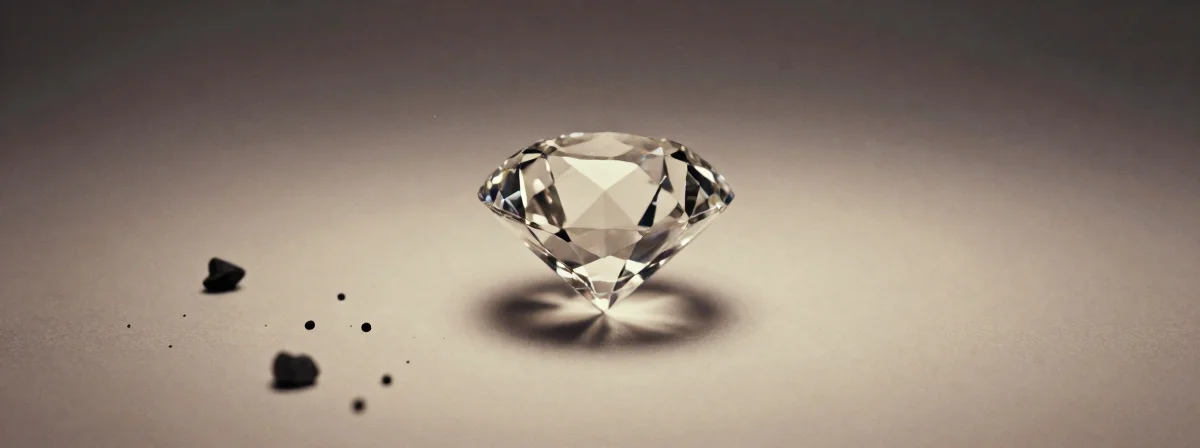
Some people spend their lives trying to build something solid—only to end up with a pile of loose bricks. It’s not about the materials you start with. It’s about how you put them together. The difference between a fragile heap and something truly unbreakable comes down to one thing: the bonds between the pieces.
You’ve probably heard the diamond vs. charcoal debate. It sounds like chemistry class, but it’s actually a brutal truth about everything you build in life.
The Technical Truth
Bricks glued with diamonds still aren’t diamonds.
Imagine trying to seal a brick wall with diamonds. Sounds absurd, right? That’s because you’re trying to use the hardest material on Earth as mortar. Diamonds are strong because every carbon atom is locked into a rigid, three-dimensional lattice. A brick wall, even if you somehow managed to glue it with diamonds, would still be held together by those weak points between bricks. The diamond bonds wouldn’t extend beyond the mortar—they’d just be tiny, isolated islands of strength in a sea of weakness.Diamonds are the ultimate Tetris champions.
Think of carbon atoms as Tetris pieces. In charcoal, they’re scattered randomly—some pieces fit, most don’t, and there are huge gaps. In a diamond, every single piece is forced into the tightest, most efficient configuration possible. Pressure and heat literally squeeze the carbon atoms until they have no choice but to lock together in a flawless lattice. That’s why diamonds are hard—they’re the result of extreme conditions forcing perfect order.Lego bricks show you the truth about bonds.
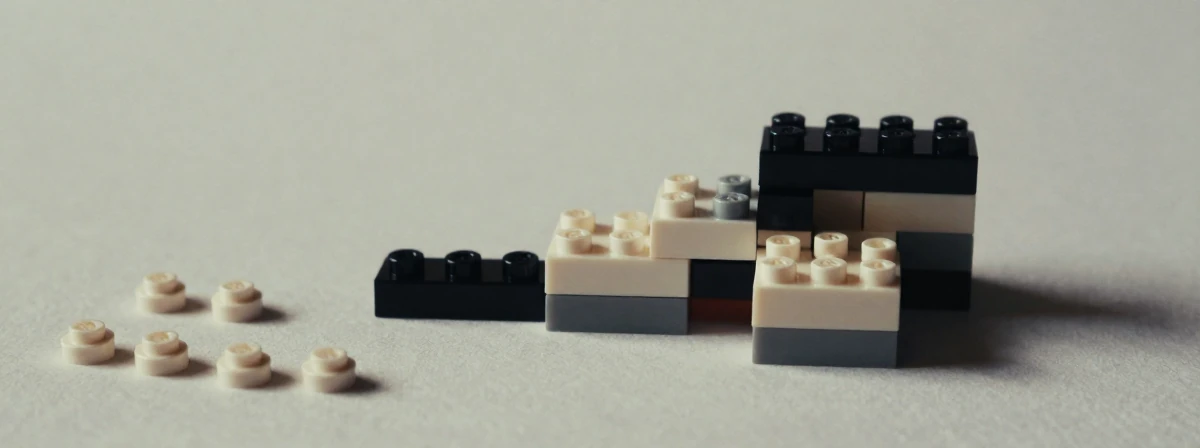
Take a handful of Lego bricks. If you snap them together loosely, with just one peg connecting them, you can easily pull them apart. Now, imagine every stud on every brick is locked into place—no gaps, no weak points. That’s diamond. Charcoal is like the first version: some connections, lots of gaps, and it falls apart under pressure. The material is the same (plastic or carbon), but the structure makes all the difference.
Density isn’t the hero here—bonds are.
People love to argue about density, but that’s missing the point. A diamond isn’t just dense; it’s a single, continuous network of covalent bonds. Charcoal is full of voids, impurities, and weak van der Waals forces between layers. It’s like comparing a solid block of steel to a pile of loose steel shavings. Both are steel, but one will stop a bullet, and the other will blow away in the wind.Your hand in a pile of Legos vs. a solid block.
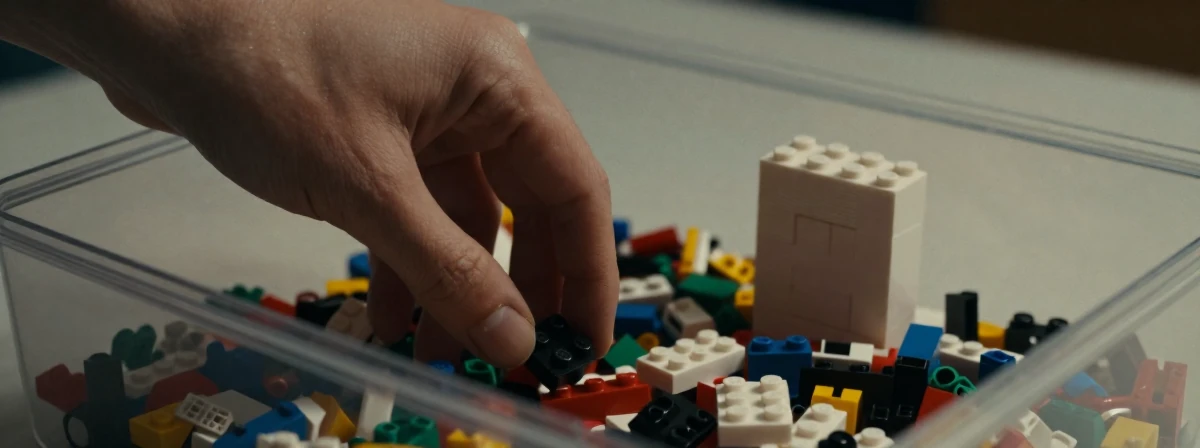
Stick your hand into a tub of loose Legos. Easy to move, right? Now try pushing your hand through a solid Lego brick wall. You can’t. The difference isn’t the material—it’s the structure. Loose atoms (or Legos) can shift and slide. Locked atoms can’t. That’s why diamond can cut glass, and charcoal can’t even hold its own weight without crumbling.
Pressed sugar candy vs. loose sugar.
Ever noticed how a compressed sugar cube is harder than loose sugar? Same idea. When you pack carbon atoms tightly under pressure, they have nowhere to go but into a rigid structure. When they’re loose, like in charcoal, they’re just a disorganized mess. The stronger something is, the less room its atoms have to wiggle.The diamond isn’t just “squished” carbon.
It’s not enough to just squeeze carbon. You have to do it under extreme heat and pressure, in just the right way. Think of it like forging a sword—just hammering metal won’t make it strong; you have to heat it, cool it, and shape it correctly. Diamonds are carbon that’s been through the ultimate forging process. Charcoal is just… cooked wood. No comparison.
Real-World Reality
The next time you feel like what you’re building isn’t strong enough, remember: it’s not about the pieces you have. It’s about how you connect them. A diamond isn’t special because it’s made of carbon. It’s special because every single atom is locked into a structure that won’t give an inch. If your project feels weak, don’t just throw more materials at it—figure out how to make the connections between them unbreakable. Because in the end, it’s the bonds that define what lasts.