
Have you ever tried to pronounce a name like Caoimhe or Niamh and felt like you were hitting a wall? It’s not just you. The Irish language has a secret that throws English speakers for a loop — it only has 18 letters in its alphabet. Yes, you read that right. Eighteen. Not twenty-six like English. And the reason why will change how you see language forever.
It’s not some ancient mystery, either. This isn’t about runes or secret codes. It’s about how a language evolved, how scholars tried to capture its soul, and how we ended up with spellings that look like they were typed on a broken keyboard.
The Tale Unfolds
Eighteen Letters, Not Twenty-Six
Modern Irish uses just 18 letters: A, B, C, D, E, F, G, H, I, L, M, N, O, P, R, S, T, and U. That’s it. No J, K, Q, V, W, X, Y, or Z. The missing sounds? They’re created by combining the letters you do have. Think of it like a linguistic puzzle — each letter is a piece, and some sounds need two or three pieces to come together. It’s not random. It’s clever. It’s how a language makes do with what it has.Letter Pairs Are the Hidden Heroes
You might see “bh” and think it’s some weird typo. But in Irish, “bh” makes a “v” sound. “Mh” does too. “Ch” sounds like the “ch” in “loch” or the Scottish “loch.” “Ng” isn’t just a silent ending — it’s a sound, like in “sing.” These combinations aren’t mistakes. They’re the workarounds that let Irish express every sound it needs without adding extra letters. It’s like saying, “We don’t have a V, but we’ll make one out of B and H.”
The Latin Alphabet Was a Make-Do Solution
Irish wasn’t always written in the Latin alphabet. In fact, for centuries, it was primarily a spoken language. When scholars finally decided to write it down, they had to adapt the Latin alphabet to fit. That’s why Irish spelling looks so… unique. It’s not chaotic. It’s a legacy of trying to capture a living language with a foreign writing system. The result? Spellings that tell the history of the language itself.Ogham: The Ancient Precursor
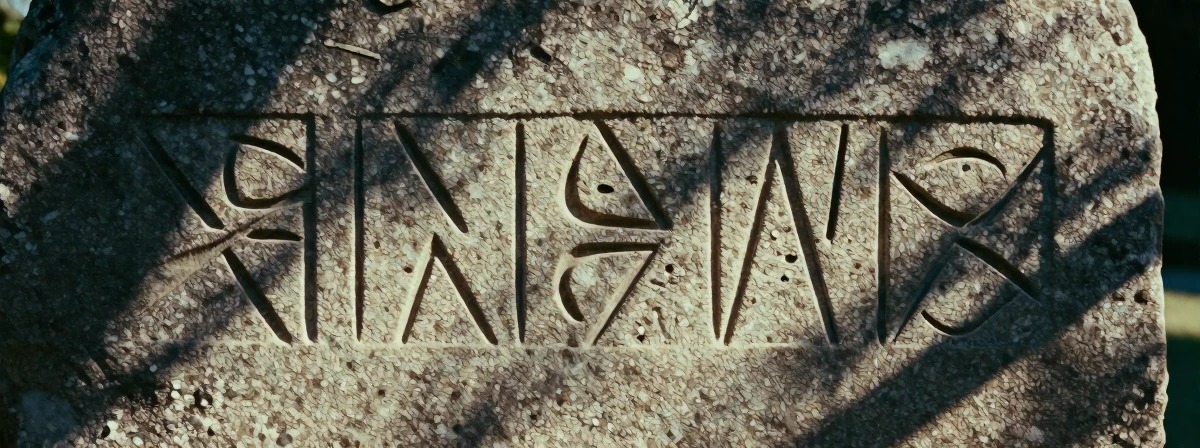
Before the Latin alphabet, there was Ogham. This ancient script was carved into stone, using lines and notches along a central stem line. It had even fewer letters than modern Irish — just enough to represent the sounds of Primitive Irish, the earliest form of the language. Some say Ogham letters were named after trees, but that’s more myth than fact. What’s true is that Ogham was a language of edges and corners, a stark contrast to the flowing curves of Latin letters. It was practical. It was direct. It was ancient.
- Names That Trip You Up (On Purpose)
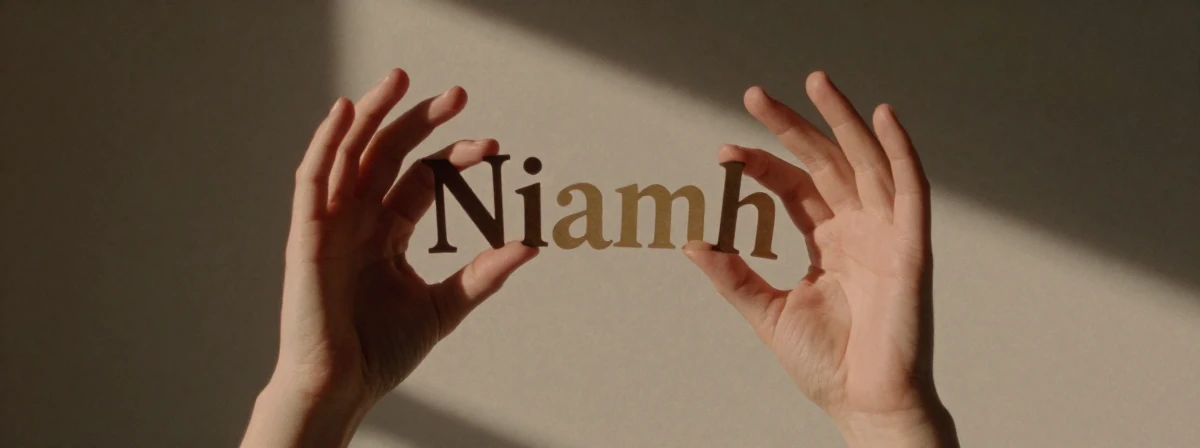
Ever tried to say Niamh? It’s not “Nee-av.” It’s “Neev” — two syllables, but often shortened to one in everyday speech. Or Caoimhe? It’s not “Keeve.” It’s “Kweeva,” with a soft “v” sound at the end. These names aren’t trying to confuse you. They’re preserving sounds that don’t exist in English. When English speakers try to simplify them, they lose something essential. The spelling isn’t the name. The sound is. And the spelling is there to guide you to the sound.
It’s Not Just Irish — It’s a Pattern
Think Irish is alone in this? Not even close. English uses “sh,” “th,” “ch,” and “ph” to create sounds that aren’t represented by single letters. The difference is that English keeps all 26 letters in its alphabet, even if some are barely used. Irish trimmed the fat. It kept only what it needed and found clever ways to build the rest. It’s a reminder that alphabets aren’t sacred. They’re tools. And some languages are better at using fewer tools to do more.Primitive Irish: Simpler, Not Simpler-Minded
The earliest form of Irish, called Primitive Irish, had an even simpler sound system. That’s why Ogham could get away with so few letters. But “primitive” doesn’t mean “simple.” It means “earlier.” Older languages often have more irregularities, more complexities hidden beneath the surface. Primitive Irish was the foundation. Later forms built on it, adding sounds, changing rules, and creating the rich, nuanced language we know today. It’s a reminder that language evolves. It doesn’t just get more complicated. It gets more alive.
The Aftermath
So next time you see an Irish name or word and feel lost, remember this: it’s not about being difficult. It’s about being precise. It’s about a language that has 18 letters but can still say everything it needs to say. It’s about history, adaptation, and the clever ways humans make language work. Maybe English could learn a thing or two. Maybe we could all learn to appreciate the beauty of making do with what we have. After all, it’s not the number of letters that matters. It’s what you do with them.