
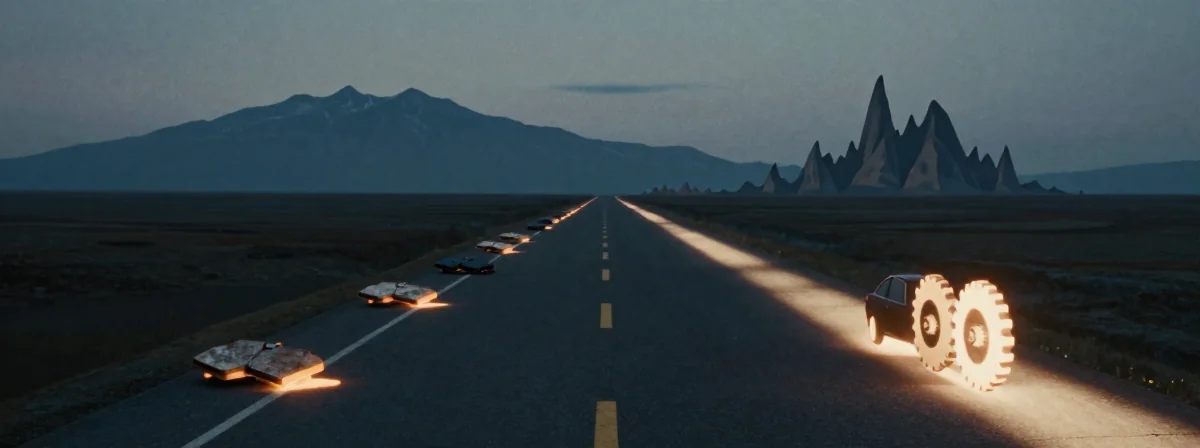
Every driver knows the feeling: you approach a stop sign, press the brake pedal, and hear that familiar screech. But what if there’s a better way—one that saves money, reduces wear, and keeps you safer? Most drivers never learn this, but engine braking isn’t just for truckers—it’s a tool you’re already paying for every time you fill up.
Engine braking happens the second you lift your foot off the gas. Your engine becomes an air pump, using compression to slow the car. It’s built into every modern car, yet most drivers rely solely on their brakes. That’s like using a sledgehammer to swat a fly.
Here’s the truth: brakes are cheap. Engines last decades. Yet we treat our brake pads like disposable tissues and our engines like glass. Let’s fix that.
Why Engine Braking Doesn’t Damage Your Engine (But Your Brakes Hate You)
Engine braking isn’t “working the engine harder”—it’s using what’s already happening. When you coast, the engine still spins; engine braking just adds resistance. Modern engines handle this easily. In fact, many cars cut fuel supply during engine braking to reduce wear.
The real wear comes from clutch misuse, not engine braking itself. If you’re grinding gears or riding the clutch, yeah, that’s bad. But a proper downshift with rev-matching? That’s normal operation. Your dad was right about brake pads being cheaper, but wrong if he told you to never engine brake.
The Single Biggest Reason to Use Engine Braking: Control
Ever feel your car lurch forward when you brake hard? That’s weight shifting to the front tires. In a curve, this kills grip. Engine braking lets you slow down smoothly, keeping weight balanced. Need to scrub speed in a turn? Engine braking is your friend. Need to avoid a deer? It gives you an extra tool without upsetting the car’s balance.
Truckers use it for a reason—when you’re hauling 80,000 pounds, brakes alone aren’t enough. They keep brakes cool, preventing fade. You’re not hauling that much, but the principle applies: less brake use = less heat = longer life.
Downshifting: The Simple Trick Most Drivers Get Wrong
Here’s how it works: as you slow, shift to a lower gear. Don’t wait until the last second—shift early, shift often. On hills, stay in a gear that lets you control speed without brakes. The goal isn’t to “wear the engine”; it’s to distribute wear.
Rev-matching (blipping the throttle before downshifting) sounds complicated, but it’s just matching engine speed to wheel speed. Do it right, and the clutch barely notices. Do it wrong, and yeah, you’ll wear it faster. Practice on empty roads until it feels natural.
The Myth of “Engine Braking Kills Your Clutch”
This one’s easy: if you’re slipping the clutch during downshifts, you’re clutch braking—not engine braking. A properly executed downshift uses the clutch briefly to sync speeds, then engages fully. The wear is negligible compared to aggressive acceleration or city driving.
Your clutch will wear out. It’s designed to. But blaming engine braking is like blaming your sneakers for walking. The real enemy is poor technique.
When to Use Brakes, When to Use the Engine
Brakes are for stopping. Engine braking is for slowing. Need to stop fast? Use brakes. Need to control speed over distance (like downhill)? Engine braking keeps you from cooking your brakes. Simple.
Those “No Engine Braking” signs? They’re for loud compression brakes (like in trucks), not your daily driver. Use engine braking freely—just don’t redline it.
The Payoff: Why This Matters Now
Less brake use = cheaper maintenance. Better control = safer driving. Engine braking isn’t a secret trick; it’s using the tools you already have. Next time you slow down, try lifting off the gas first. Then, if needed, brake. You’ll notice the difference.
Stop treating your brakes like they’re infinite. Start thinking of your car as a system, not separate parts. Engine braking isn’t about saving the engine—it’s about using the whole car the way it was designed. Now go try it.