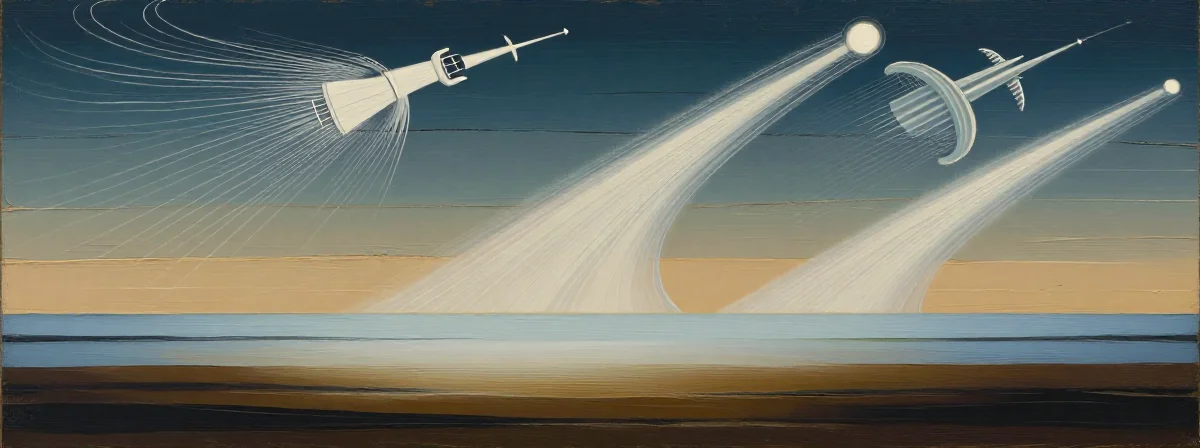
Some people spend their lives chasing the horizon. Others simply draw it first. Jules Verne, with a quill and a slide rule, did the latter. His imagination wasn’t just wild—it was grounded in the quiet certainty of physics. The story of how he predicted the American space program isn’t just a footnote; it’s a meditation on how we see what’s coming. Like watching a river form its path before the rain falls, Verne mapped the trajectory of human ambition. The details are what anchor this vision, the specifics that make the impossible suddenly feel inevitable.
Finding Center
The Math Was Already Written
Aristarchus calculated the moon’s distance centuries before Verne was born. The laws of motion weren’t secrets—they were textbooks. Verne didn’t invent orbital mechanics; he read Galileo and Newton like a modern engineer reads Feynman. He saw the numbers, the angles, the leverage points of a spinning Earth, and he followed them to their logical conclusion. It wasn’t divination; it was deduction. Like a gardener who knows which seeds will sprout in which soil, Verne planted his story where the science would grow. The math wasn’t his discovery—it was his map.Florida Wasn’t Random
The choice of Florida wasn’t a guess; it was a calculation. Launching from the east coast means falling into the ocean, not the woods. Launching from the south means riding the planet’s spin like a surfer catching a wave. Verne knew this in 1865. He didn’t need a supercomputer; he needed a compass and the patience to think like a cannonball. This isn’t unsettling—it’s humbling. The world wasn’t flat to him, and neither was the path to the moon.The Gun Club Was America
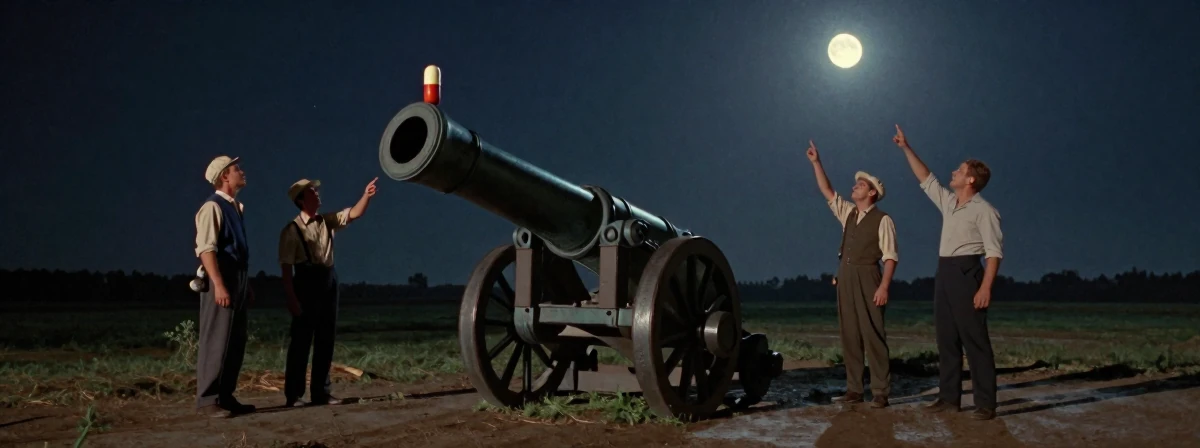
The Baltimore Gun Club wasn’t just a setting; it was a metaphor. After the Civil War, America was brimming with engineers who’d built cannons, not cathedrals. Verne saw a nation with too much power and nowhere to aim it. So he aimed it at the moon. The satire isn’t in the rocket; it’s in the reason for the rocket. Like a potter who throws clay not to make a bowl but to feel the weight of creation, Verne gave America its destiny by giving its gunsmiths a new target. The real prediction wasn’t the trip—it was the traveler.
- Weightlessness Was a Given
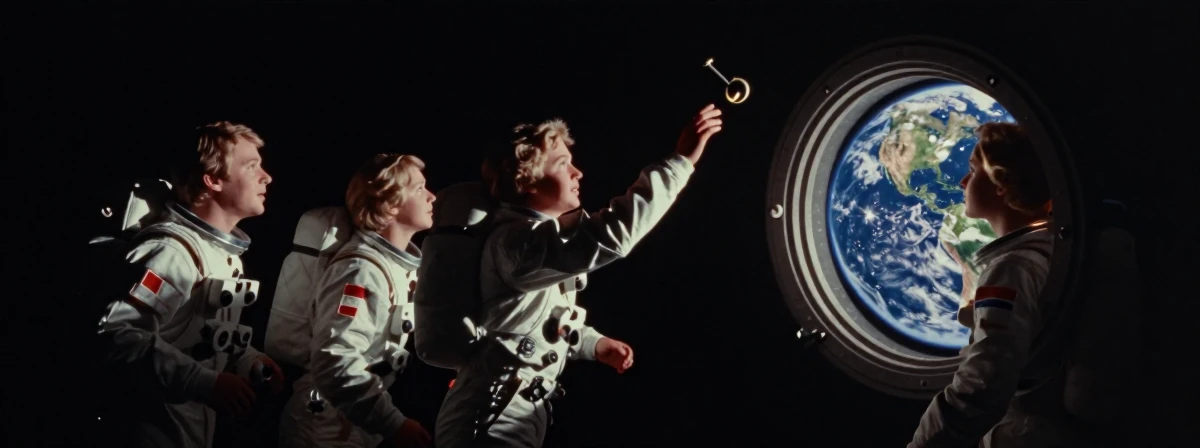
In 1865, Verne described astronauts floating inside their capsule. He didn’t call it microgravity; he called it “a strange sensation.” He knew that once the cannon’s thrust faded, the laws of the heavens would take over. This wasn’t science fiction; it was physics homework. Like a musician who knows the notes before the song is written, Verne knew the silence between the launch and the landing. The real marvel isn’t that he got the details right; it’s that he treated the unknown as something to be understood, not feared.
The Pacific Was the Return Port
Apollo 11 splashed down in the Pacific. Verne’s travelers did too. Three crew members. A splashdown. The name “Columbia” for the command module wasn’t an homage—it was a receipt. Verne handed NASA the blueprint and asked for change. The man who wrote about shooting a bullet to the moon also wrote about catching it like a fish. This isn’t prophecy; it’s craftsmanship. Like a carpenter who knows how his wood will bend before he cuts it, Verne knew how his story would land.The Dog Didn’t Matter
The dead dog in the capsule, the trash thrown out the window—these aren’t mistakes. They’re humanity. Verne didn’t sanitize his vision; he filled it with the clutter of life. Like a mountain climber who brings his coffee mug to the summit, Verne brought the weight of the world to the moon. The details that seem absurd are the ones that make the journey real. The wild packs of “moondogs” aren’t a joke; they’re a warning. What we take with us defines where we land.
The Path Ahead
The real wonder isn’t that Verne predicted the future; it’s that we still chase the ghosts he left behind. His Florida wasn’t a place—it was a promise. His cannon wasn’t a weapon; it was a question. What will you aim at when you have nowhere left to aim? The moon was always Florida, and the Florida was always in our minds first. Now it’s our turn to draw the horizon. Now it’s our turn to see what comes next. Like a river that knows its mouth before it meets the sea, we know where we’re going—we just need to remember how to get there.