

Waiting in a medical scanner feels different depending on which machine you’re in. Ever wonder why MRI feels like an eternity in a tight tube, while CT is over before you can finish your deep breaths? It’s not just your imagination — there’s actual physics and engineering at play.
Performance Analysis
MRI Is Measuring Faint Whispers, Not Shouting
MRI works by listening to the tiny signals emitted by hydrogen atoms in your body when they’re flipped upside down in a magnetic field (that “handstand” analogy is spot on). These signals are incredibly weak — like trying to record a whisper from across a stadium. You have to collect them over and over to get a clear picture. CT, on the other hand, uses X-rays that are like floodlights: you can blast enough energy through your body in a split second to get a complete image. It’s not that MRI is “slow” — it’s that it’s limited by how faint its signal is. Think of it as the difference between trying to hear a pin drop versus listening to a concert.The Tube Isn’t Just for Science — It’s for Strength
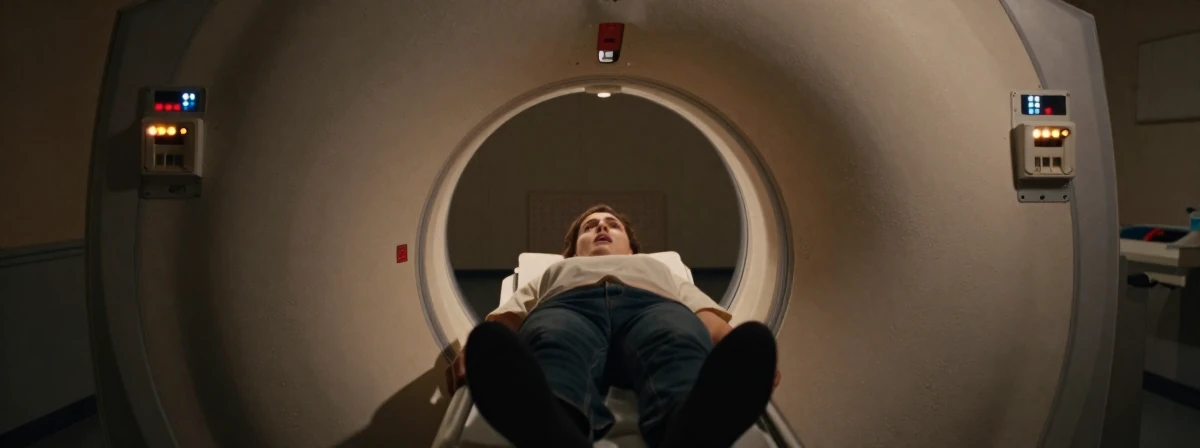
Those strong magnets MRI needs to make atoms flip? They’re easier and cheaper to build when the space they contain is narrow. A wider bore (the hole you lie in) would require exponentially more powerful and expensive magnets, plus it messes with the gradient fields that create image detail. It’s like trying to build a powerful electromagnet inside a water bottle versus a soda can — the smaller container makes the physics work better. And while newer “open” MRIs exist, they often come with trade-offs in resolution or scan time. Sometimes the tight tube is just the most practical way to get the best picture.
- CT Doesn’t Take Slices — It Takes Volumes
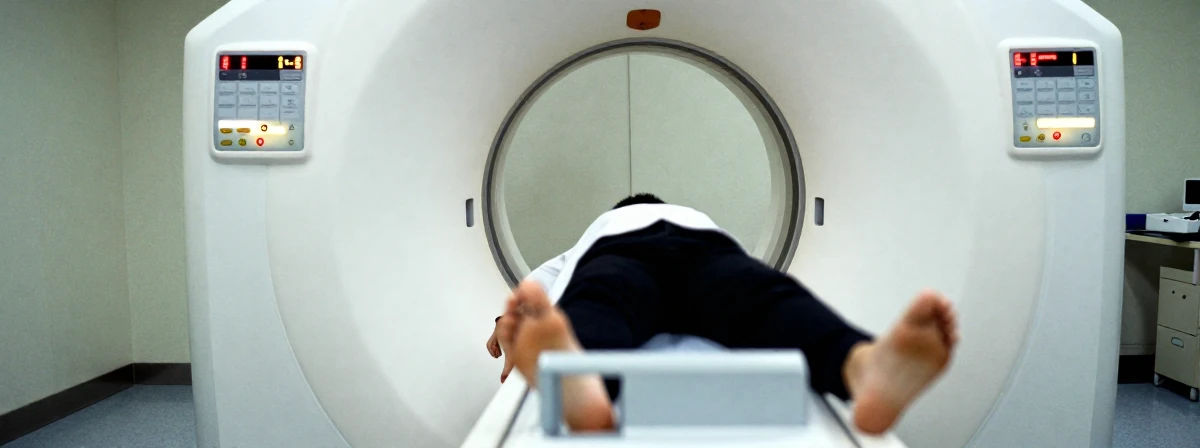
You might assume both MRI and CT take one slice at a time, but modern CT scanners capture entire volumes in a single rotation. High-end CTs can image up to 640 slices (or more) at once while you slide through — that’s a full 3D chunk of your body in less than a second. MRI, however, genuinely builds its image slice by slice, and often needs multiple sequences with different timing to get the information it needs. It’s like the difference between photographing a loaf of bread one slice at a time versus spinning it under a camera that captures the whole thing in one go. MRI’s approach is more precise, but it comes with a time cost.
Every “Setting” in MRI Is a New Experiment
When you’re in an MRI, each type of image (like “T1-weighted” or “FLAIR”) isn’t just a filter applied later — it’s a completely new scan with different timing and energy pulses. CT can adjust its settings on the fly or apply processing after the fact with minimal delay. MRI has to physically collect that data again, and some sequences literally require waiting seconds between steps to let atoms settle. It’s like trying to get different artistic effects from a camera that can only take one exposure at a time, versus one that can instantly switch modes. MRI’s precision is beautiful, but it’s not fast.The Noise Isn’t Just Annoying — It’s Physics in Action
That clanking you hear during an MRI comes from gradient coils rapidly turning on and off. These are what encode spatial information into the faint signals — and stronger gradients (which give better detail) create louder noise. They also work best when close to you, another reason for the tight bore. CT’s rotating components are quieter because they’re just spinning steadily. It’s the difference between a machine making quick, forceful adjustments versus one moving in a smooth, continuous motion. The noise is a side effect of MRI’s precision, not just bad engineering.
Should You Buy It?
Don’t think of MRI and CT as “better” or “worse” — think of them as tools for different jobs. MRI gives you the deep, detailed look that’s worth the wait, while CT offers speed when that’s what matters most. Next time you’re scheduled for a scan, at least you’ll know why one feels like an eternity and the other is practically over before it begins. The technology may be complex, but the experience is simple: when it comes to medical imaging, patience and precision often go hand in hand.